
Portable Power Planning for Hurricane Season and Severe Weather Emergencies
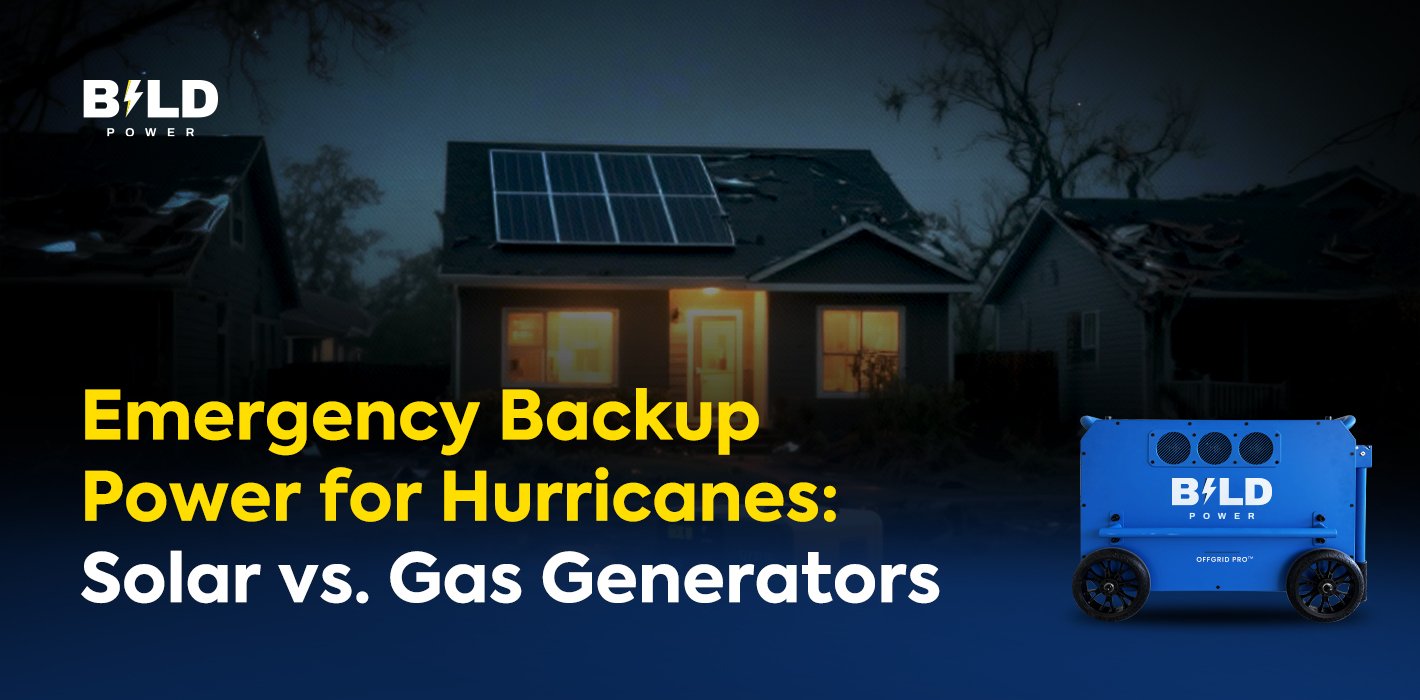
When hurricane season approaches, preparing for severe weather requires more than stocking food and water. Extended power outages can affect refrigeration, communication, lighting, cooling, medical equipment, and other essential household needs. Bild Power provides portable energy solutions that can become part of a broader hurricane backup power strategy, helping households prepare for periods when the electrical grid may be unavailable.
A strong emergency plan starts before the first storm develops. By understanding household energy requirements, preparing essential devices, planning for recharging, and organizing backup equipment in advance, families can respond more confidently when severe weather causes an unexpected outage. A reliable portable power station can become one important component of that preparation.
Why Hurricane Power Planning Matters
Severe weather can create power interruptions that last much longer than a typical electrical outage. Hurricanes can damage utility infrastructure, disrupt transportation, limit access to fuel, and make restoration efforts more difficult. Families may therefore need to manage without normal electricity for an extended period.
This is why emergency backup power should be considered before storm conditions arrive. Instead of deciding what to do after the electricity fails, households can identify essential equipment, calculate expected energy consumption, and prepare their portable energy storage system ahead of time.
Identify Essential Household Power Needs
The first step in storm preparation is determining which devices actually need electricity during an emergency. Not every appliance needs to operate continuously, and prioritizing essential equipment can significantly extend available battery runtime.
Families can create a simple emergency power list that includes refrigerators, medical equipment, communication devices, lights, fans, laptops, internet equipment, and other necessities. BILD Power recommends considering both running wattage and startup or surge requirements when calculating power needs.
Separate Critical And Optional Devices
Critical devices should receive priority during a prolonged outage. Refrigeration, communications, essential medical equipment, lighting, and basic cooling may be more important than entertainment devices or appliances that can remain switched off.
Creating categories before hurricane season makes decisions easier during stressful conditions. A household can identify which equipment should run continuously, which devices can operate periodically, and which items should only be used when sufficient battery capacity remains.
Understand Watts And Watt-Hours
Choosing a battery backup requires understanding two basic measurements: watts and watt-hours. Watts describe how much power a device requires at a particular moment, while watt-hours describe how much stored energy is available over time.
For example, a device drawing 100 watts continuously would theoretically use 1,000 watt-hours over ten hours before accounting for system losses. Real-world runtime can vary based on efficiency, operating patterns, temperature, and other factors, so calculations should always include a reasonable margin.
Account For Startup Power
Some appliances require considerably more power when their motors initially start. Refrigerators, pumps, and similar equipment may have a temporary surge that is higher than their normal running consumption.
A backup system must therefore provide enough output to handle both continuous loads and short startup demands. BILD Power’s guidance specifically recommends checking surge requirements when planning a home backup system.
Build A Layered Emergency Plan
Portable power should not be viewed as the entire hurricane preparedness strategy. A strong plan combines electricity backup with water, food, first aid supplies, communication tools, flashlights, important documents, and other emergency necessities.
The advantage of creating a layered plan is that households are not dependent on one solution. If one resource becomes unavailable, other preparations can help bridge the gap while utilities and services are restored.
Prepare Before Storm Conditions
Waiting until a hurricane is approaching can create unnecessary pressure. Batteries should be charged, cables should be organized, devices should be tested, and important equipment should be easy to access.
The same preparation applies to solar charging equipment. If a portable power station is intended to be recharged using solar energy, homeowners should understand how the panels connect and confirm that the setup is ready before severe weather arrives.
Keep Backup Power Easily Accessible
Where backup equipment is stored can matter during severe weather. A portable power station should be kept in an appropriate, accessible location where it can be inspected, charged, and moved when necessary.
Important accessories should remain together rather than scattered around the house. Charging cables, adapters, extension equipment, solar connections, and device-specific cords should be easy to identify.
A simple emergency power kit can include:
- Portable power station
- Compatible charging cables
- Solar charging equipment
- LED lights or lanterns
- Device charging cables
- Power strips or appropriate adapters
Keeping everything organized reduces the chance of searching for equipment after an outage has already begun.
Plan Around Extended Power Outages
A hurricane-related outage may not follow a predictable schedule. Power could return quickly, or restoration could take considerably longer depending on infrastructure damage and local conditions.
Because of this uncertainty, households should plan for multiple stages of an outage rather than assuming electricity will return within a few hours. Battery conservation, energy prioritization, and recharging opportunities all become increasingly important as the outage continues.
Conserve Energy Between Charges
Battery capacity lasts longer when households avoid unnecessary consumption. Turning off unused devices, reducing standby loads, and operating high-demand appliances only when necessary can preserve stored energy.
Families can also establish specific charging periods. Instead of allowing every device to remain connected continuously, phones, laptops, rechargeable lights, and other electronics can be charged according to priority.
Use Solar Recharging Strategically
One of the biggest challenges during a prolonged outage is replacing the energy that has already been consumed. Solar charging can provide an additional way to replenish a compatible portable power station when grid electricity is unavailable.
BILD Power’s OffGrid Pro is designed with solar input capabilities, allowing compatible solar panels to contribute to recharging. Its specifications list up to 3,700W of high-voltage solar input, although actual charging performance depends on available sunlight, panel configuration, and other conditions.
Make Daylight Work Harder
Solar generation is naturally limited by weather, sunlight intensity, panel orientation, and available daylight hours. During storm conditions, cloudy skies may reduce production substantially.
For that reason, solar should be treated as part of a broader energy strategy rather than an assumption of unlimited electricity. When sunlight is available, households can prioritize recharging while continuing to conserve stored battery capacity.
Choose Capacity For Real Needs
The largest portable power station is not automatically the best choice for every household. The right system depends on what needs to be powered, how long the outage may last, and whether solar or another charging method will be available.
For households with several essential appliances, higher capacity can provide greater flexibility. BILD Power’s OffGrid Pro provides 9,792Wh of battery capacity and is designed for emergency backup, outdoor use, and off-grid applications.
Consider Output As Well
Battery capacity is only one part of the decision. Output capability determines whether the system can operate the appliances a household needs during an emergency.
The OffGrid Pro offers 120V/240V pure-sine-wave output with a rated output of 3,600W at 120V and 7,200W at 240V. Those specifications can be useful for households planning to support a mixture of electronics and higher-demand equipment, provided individual devices remain within the system’s operating requirements.
Prepare For Refrigeration Needs
Keeping food cold can become an important concern during a prolonged blackout. Refrigerators cycle on and off rather than consuming their maximum power continuously, but their compressors can create startup demands that need to be considered when selecting backup equipment.
A good emergency plan should determine how refrigeration will be prioritized alongside other household loads. Rather than assuming the battery can operate every appliance simultaneously, families should calculate expected usage and decide which devices take priority.
Reduce Unnecessary Refrigerator Opening
Energy planning also involves changing household habits during an outage. Opening the refrigerator repeatedly allows cold air to escape and can increase the amount of time the appliance needs to operate.
Keeping the refrigerator closed as much as possible can help preserve its internal temperature while reducing unnecessary energy consumption. This simple habit can complement a portable power station and extend the usefulness of stored electricity.
Maintain Communication During Emergencies
Communication becomes especially important when severe weather disrupts normal services. Smartphones, laptops, radios, internet equipment, and other electronics may help families receive emergency information or communicate with relatives.
A backup power solution can help keep these devices available when household outlets stop working. Smaller electronics generally require less energy than major appliances, so they can often be prioritized during longer outages.
Protect Internet And Mobile Devices
For households that rely on internet connectivity for work, school, communication, or emergency information, networking equipment may also deserve a place on the priority list.
Families should determine how much electricity their modem, router, phone chargers, and other communication equipment require. Having this information before hurricane season makes it easier to create an efficient power schedule.
Plan For Cooling And Comfort
Heat can make a power outage significantly more difficult, particularly when severe weather occurs during warm months. Fans, smaller cooling equipment, and ventilation strategies can become important parts of an emergency energy plan.
BILD Power’s guidance notes that portable power stations can support fans and smaller air-conditioning units during outages, while actual runtime depends on the equipment’s power requirements and battery capacity.
Prioritize Efficient Cooling Equipment
Not every cooling device consumes the same amount of electricity. Before hurricane season, households should identify the equipment they expect to use and check its power requirements.
A lower-power fan may provide useful airflow while consuming considerably less energy than a larger cooling appliance. Combining efficient equipment with smart scheduling can help stretch available portable energy storage.
Consider Medical And Essential Equipment
Some households depend on electrically powered medical or accessibility equipment. These needs should receive particularly careful consideration when developing an emergency power plan.
Families should determine the equipment’s power requirements, expected runtime, backup options, and manufacturer recommendations well before severe weather arrives. Where medical equipment is involved, households should also maintain appropriate professional guidance and emergency contacts.
Create A Dedicated Priority List
A written priority list can help prevent confusion when battery capacity is limited. Essential equipment should be identified separately from devices that can be delayed or used intermittently.
This approach allows households to make informed decisions rather than relying on guesswork after the electricity goes out.
Understand Portable Power Safety
Emergency electricity should always be used according to the manufacturer’s instructions. Before hurricane season, families should understand the operating limits of their power station, charging equipment, outlets, cables, and connected devices.
Portable battery systems also have different requirements from fuel-burning generators. BILD Power positions the OffGrid Pro as a battery-based, fume-free alternative for backup use and lists overload protection among its features.
Avoid Improvised Electrical Connections
Households should never assume that any portable power station can safely energize a home’s electrical wiring through improvised connections. Where a system is being integrated into household circuits, appropriate equipment and qualified electrical guidance should be used.
For basic emergency preparation, directly connecting approved devices to the appropriate outlets on the power station can provide a simpler approach, provided the connected loads remain within manufacturer specifications.
Prepare For Multiple Storm Scenarios
Hurricane season is not the only time severe weather can interrupt electricity. Tropical storms, thunderstorms, flooding, extreme heat, winter storms, and other events can create unexpected outages.
A well-designed emergency preparedness plan can therefore be useful throughout the year. Portable energy storage does not have to remain unused between hurricanes; it can also support camping, outdoor work, remote activities, and other situations where conventional electrical access is limited.
Review The Plan Regularly
Emergency planning should be treated as an ongoing process. Households can periodically check battery charge levels, inspect cables, test equipment, update device lists, and replace expired emergency supplies.
It is also useful to recalculate energy requirements when household circumstances change. New appliances, additional medical equipment, work-from-home needs, or changes in family size can all affect the amount of backup power required.
Portable Power Can Add Flexibility
A portable power station can give households more flexibility because it can support multiple types of equipment from a single rechargeable energy source. Rather than depending entirely on fuel availability or grid restoration, families can use stored battery capacity for selected essential loads.
The OffGrid Pro combines 9,792Wh of capacity with 120V/240V output, LiFePO4 battery technology, and solar charging capabilities. These characteristics make it relevant for households building a substantial hurricane backup power strategy, although every home should still determine its requirements before selecting a system.
Match Equipment To Priorities
The best emergency setup is not simply the one with the highest specifications. It is the one that aligns with the household’s actual needs.
A family focused on refrigeration and communications may have different requirements from a household that needs cooling, medical equipment, work equipment, and several high-demand appliances. Understanding those differences makes backup power planning more practical and cost-effective.
Create A Hurricane Power Checklist
A written checklist can turn a complicated emergency plan into a series of manageable tasks. Completing the checklist before hurricane season means fewer decisions need to be made during a storm.
A household checklist might include:
- Calculate essential device wattage
- Check startup or surge requirements
- Fully charge the battery system
- Test all charging cables
- Prepare solar panels if available
- Identify essential appliances
- Establish a power-use schedule
- Store emergency equipment together
- Check communication devices
- Review the plan with family members
The goal is not to predict exactly what will happen during every storm. Instead, it is to make sure the household has a practical response ready when normal electricity becomes unavailable.
Common Hurricane Power Planning Mistakes
One of the most common mistakes is waiting until a storm is approaching before purchasing or testing emergency equipment. Last-minute preparation can make it harder to compare options, locate compatible accessories, or determine actual household energy requirements.
Another mistake is focusing only on battery capacity without considering output, surge requirements, charging options, and actual device usage. A complete portable power planning strategy considers the entire system rather than one specification.
Avoid Overestimating Battery Runtime
Manufacturers may provide runtime examples, but actual performance depends on the connected load and operating conditions. A refrigerator that cycles on and off will behave differently from a device drawing a constant load.
Households should therefore use manufacturer specifications as guidance while building their own estimates around real appliances. BILD Power similarly notes that actual runtime varies according to power draw.
Make Preparation Part Of Routine
The strongest emergency plans are usually the ones that become routine rather than something families remember only when a storm is approaching. A few simple checks throughout the year can keep equipment ready for unexpected outages.
Charging the system, inspecting connections, reviewing essential loads, and maintaining emergency supplies can all become part of seasonal household preparation. This makes severe-weather response less stressful and more organized.
Review Before Every Hurricane Season
Before hurricane season begins, households can revisit their entire backup power plan. Check whether the battery system still meets current needs, whether accessories are compatible, and whether family members understand how the equipment should be used.
This annual review also provides an opportunity to improve the plan based on previous outages. Each experience can reveal which devices were truly essential, where energy was wasted, and what should be changed next time.
Frequently Asked Questions
How much portable power is needed?
The required capacity depends on which devices need to operate and for how long. Families should calculate the wattage and expected usage of essential appliances before selecting a power station.
Can portable power support hurricane emergencies?
Yes. Portable power stations can provide stored electricity for selected household devices when grid power is unavailable. Their usefulness depends on battery capacity, output capability, connected loads, and available recharging options.
Can solar panels recharge backup batteries?
Compatible portable power stations can be recharged with solar panels. However, charging speed depends on sunlight, panel configuration, weather conditions, and the system’s solar input specifications.
Should refrigerators be included?
Yes. Refrigeration is often an important emergency load, particularly during extended outages. Families should account for both running consumption and compressor startup requirements.
How can battery power last longer?
Prioritize essential equipment, avoid unnecessary loads, reduce standby consumption, use efficient appliances, and operate higher-demand devices only when necessary.
What should families do before a hurricane?
Charge the backup battery, test equipment, organize cables, calculate essential power needs, prepare emergency supplies, and establish a clear plan for which devices receive electricity first.
Conclusion
Hurricane preparedness requires more than reacting after the electricity fails. A practical backup power strategy begins with understanding household energy requirements, identifying essential devices, preparing backup equipment, and planning how stored electricity will be conserved throughout an outage. Solutions from Bild Power can provide an important layer of resilience when severe weather disrupts normal power.
The most effective approach combines battery capacity with realistic energy calculations, solar charging where appropriate, efficient appliance use, and clear household priorities. Families should also review their equipment regularly and make sure everyone understands how the system should be used before an emergency occurs.
With thoughtful hurricane backup power planning, households can approach severe weather with greater confidence and flexibility. Preparing in advance cannot prevent storms or guarantee uninterrupted electricity, but it can make prolonged outages easier to manage while families wait for normal utility service to return.