
Best Villa Interior Designers in Delhi: Cost, Styles & Plans
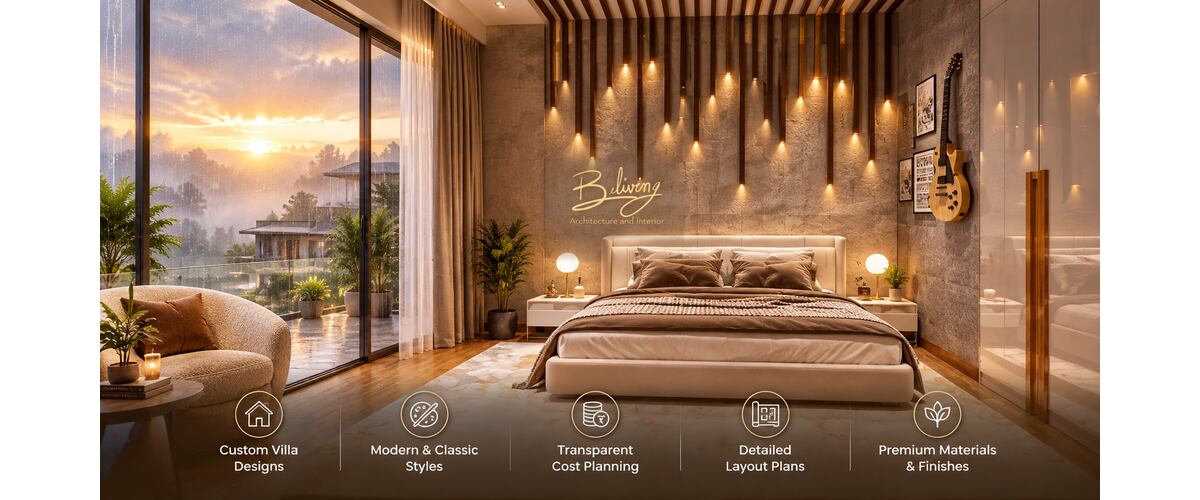
Designing a villa in Delhi involves much more than selecting attractive furniture and wall colours. A successful villa interior needs careful space planning, practical storage, suitable materials, lighting, furniture proportions, and a clear budget from the beginning. Homeowners searching for the Best Villa Interior Designers in Delhi are usually looking for a complete solution that can connect different floors, bedrooms, living areas, kitchens, bathrooms, offices, and entertainment spaces into one comfortable home.
Beliving Interior focuses on residential and villa interiors with attention to functionality, customised planning, materials, storage, lighting, finishes, and execution. For a large property, this type of integrated approach can help maintain consistency while allowing each room to have its own character.
What Makes Villa Interior Design Different From Apartment Interiors?
A villa generally provides more usable space, but that does not automatically make the design easier. Larger rooms create more furniture decisions, while multiple floors introduce additional circulation, staircase, lighting, and storage requirements.
A villa may also contain formal and informal living areas, several bedrooms, a larger kitchen, utility spaces, a home office, dressing rooms, balconies, terraces, and entertainment zones.
The designer therefore needs to understand how the family moves through the property instead of designing each room independently.
Key planning areas
- Entrance and foyer
- Formal living and dining
- Family lounge
- Bedrooms and dressing areas
- Kitchen and utility
- Staircases and passages
- Home office or study
- Entertainment room
- Bathrooms
- Balcony and terrace areas
The first objective should be functionality. Once the circulation and furniture layout work properly, colours, textures, decorative elements, and premium finishes can be introduced.
How Much Does Villa Interior Design Cost in Delhi?
Villa interior pricing in Delhi varies considerably because every project has a different size, specification, and scope. Materials, custom furniture, kitchen requirements, civil modifications, lighting, automation, and the amount of site work can all change the final budget.
Current 2026 Delhi references show broad residential interior ranges. One current Delhi guide places basic work around ₹1,200–₹2,000 per sq. ft., mid-range work around ₹2,000–₹3,500, and premium customised interiors around ₹3,500–₹6,000+ per sq. ft.
For larger villas, however, a simple per-square-foot calculation should only be treated as an initial planning tool. A detailed scope is more reliable because a villa can contain rooms with very different levels of customization.
A practical Delhi planning budget
For an approximately 3,000–5,000 sq. ft. villa, homeowners may broadly encounter:
- Functional/moderate interiors: ₹20–40 lakh+
- Premium interiors: ₹40–80 lakh+
- Luxury customised interiors: ₹80 lakh–₹1 crore+
- Highly bespoke projects: ₹1 crore and above
These are indicative planning ranges, not fixed quotations. Current market sources also show villa budgets varying substantially according to finish level and scope. For example, one 2026 calculator gives ₹20.2–₹39.2 lakh as an indicative premium range for a villa/5+ BHK category, while other sources report substantially higher figures for luxury specifications.
A proper quotation should therefore identify the exact materials, quantities, furniture, hardware, electrical work, civil work, kitchen scope, lighting, and exclusions.
Where Does Most of the Villa Budget Go?
A common mistake is to think that the largest expense will automatically be the living room. In reality, extensive woodwork and customised furniture can consume a significant portion of the overall interior budget.
Wardrobes, TV units, beds, wall storage, dressing units, crockery units, kitchen cabinets, study furniture, and other built-ins can add up quickly in a large villa.
Materials also make a major difference. Laminate, veneer, acrylic, PU, natural stone, engineered surfaces, glass, metal, and premium hardware each sit at different price levels.
Major cost factors
- Custom carpentry and furniture
- Kitchen cabinetry and hardware
- Wardrobes and dressing areas
- False ceilings
- Electrical modifications
- Decorative and functional lighting
- Flooring and wall finishes
- Bathroom upgrades
- Civil modifications
- Home automation
- Curtains and soft furnishings
- Artwork and décor
A useful approach is to divide the budget into essential, important, and optional elements. This makes it easier to protect the quality of areas that matter most to the family.
Home Interior Designer in Delhi NCR: Planning the Complete Villa
A good home interior plan should treat the property as one connected environment rather than a collection of isolated rooms. When working with a Home Interior Designer in Delhi NCR homeowners can benefit from coordinating layouts, colours, furniture, lighting, storage, materials, and circulation across the entire home for a consistent and functional result.
For example, the living room may use a warm wood tone that continues into the dining area, while the bedroom design can introduce softer versions of the same palette. This creates visual continuity without making every room identical.
The same principle can be applied to flooring, doors, hardware, lighting temperatures, ceiling details, and cabinetry.
A practical home design should also consider daily routines. A family with children may require more concealed storage, while homeowners who frequently entertain guests may need larger dining, seating, and entertainment areas.
For a villa, the designer should ideally resolve major furniture and storage positions before decorative finishes are finalised. This prevents electrical points, lighting fixtures, and circulation routes from becoming afterthoughts.
How Should You Plan Different Villa Rooms?
Every room has a different functional purpose. The design should respond to that purpose instead of applying one decorative formula throughout the property.
Living room
The living room should establish the home’s visual character. Furniture should be proportionate to the room, with enough open circulation around seating.
Large villas can accommodate statement walls, display units, layered lighting, artwork, and larger seating arrangements, but empty space should also be preserved.
Dining area
The dining area should maintain comfortable movement around the table. Storage for crockery and serving items can be integrated into a nearby unit.
Pendant lighting above the dining table can provide a visual centre while creating a more intimate atmosphere.
Bedrooms
Bedrooms should prioritise comfort, storage, lighting, and privacy. Wardrobe placement should be decided according to available wall length and circulation.
A master bedroom may include a dressing area, study corner, lounge chair, TV unit, or additional storage depending on the floor plan.
Bathrooms
Bathroom design needs more technical planning than many homeowners expect. Waterproofing, plumbing positions, ventilation, tile selection, sanitaryware, lighting, mirrors, and storage should be coordinated before installation.
Choosing a Villa Interior Style
The style should complement both the architecture and the family’s lifestyle.
Contemporary
Contemporary villa interiors use clean forms, controlled colour palettes, modern furniture, layered lighting, and selected statement materials.
Modern Luxury
Modern luxury often combines premium materials with restrained detailing. Marble, veneer, textured walls, custom furniture, sophisticated lighting, and high-quality hardware can create a refined appearance.
Minimalist
Minimalism focuses on visual clarity and purposeful furniture. Storage becomes particularly important because clutter can quickly undermine the concept.
Modern Indian
Modern Indian interiors can combine contemporary layouts with Indian artwork, wood detailing, handcrafted elements, textiles, or traditional patterns.
The objective is not to copy a trend but to create a style that remains comfortable and relevant for the family over time.
Luxury Interior Designers in Delhi: What Should Luxury Include?
The search for luxury interiors often starts with premium materials, but genuine luxury is not simply about using the most expensive products. When comparing Luxury Interior Designers in Delhi homeowners should also consider craftsmanship, customization, space planning, lighting, detailing, comfort, and how effectively the design reflects their lifestyle and preferences.
Proportion, craftsmanship, lighting, detailing, comfort, and customisation are equally important.
For example, an expensive marble may not improve a room if the furniture arrangement is uncomfortable. Similarly, a premium wardrobe finish has limited value if its internal storage does not match the homeowner’s requirements.
Common luxury elements
- Bespoke furniture
- Premium veneer and PU finishes
- Natural stone
- Designer lighting
- Custom wardrobes
- Dedicated dressing areas
- Smart-home controls
- High-quality kitchen hardware
- Statement walls
- Curated artwork
- Premium bathroom fittings
Beliving Interior’s positioning around residential and luxury interiors makes this type of project particularly relevant when homeowners want design decisions to combine aesthetics with practical living requirements.
How Can You Make a Luxury Villa Feel Comfortable?
A luxury villa should not feel like a showroom. It should work naturally for everyday life.
Soft furnishings, comfortable seating, warm lighting, useful storage, and appropriate furniture proportions can make a large space feel more inviting.
Another important factor is visual balance. If every wall contains a feature, every ceiling has decorative detailing, and every room uses multiple materials, the home can become visually busy.
A better strategy is to create a hierarchy: some areas act as focal points while others provide visual breathing space.
What Should You Know Before Hiring an Interior Designer?
Before selecting a designer, homeowners should understand what will actually be delivered.
A portfolio is useful for understanding the designer’s aesthetic, but the execution process is equally important. Ask about drawings, material specifications, site supervision, revisions, timelines, quality checks, and handover.
The quotation should also explain what is included and excluded.
Questions worth asking
- Have you completed similar villa projects?
- Who will supervise the site?
- Are 2D and 3D designs included?
- How many design revisions are allowed?
- Which material grades are specified?
- Which hardware brands or specifications are included?
- Is civil work included?
- Is electrical work included?
- What happens when the client requests changes?
- What is the expected completion timeline?
- What support is available after installation?
These questions can reveal differences between apparently similar proposals.
How to Control Villa Interior Costs Without Losing Quality
Controlling the budget does not necessarily mean selecting the cheapest materials everywhere.
Instead, decide where premium spending creates the most practical or visual value.
For example, homeowners may prioritise kitchen hardware, frequently used wardrobes, living-room furniture, lighting, or master-bedroom storage while using simpler finishes in less visible areas.
Smart ways to manage the budget
- Finalise the floor plan before detailed design
- Avoid unnecessary structural changes
- Prioritise frequently used spaces
- Compare material specifications rather than only prices
- Keep adequate storage planning from the beginning
- Select durable finishes for high-use areas
- Keep a contingency for unexpected site work
- Confirm taxes and exclusions in the quotation
- Avoid frequent design changes during execution
Current Delhi cost research also highlights that material selection, customisation, storage, civil work, false ceilings, and lighting can significantly change the final project value.
Best Villa Interior Designers in Delhi: What Should You Compare?
When homeowners compare villa interior design professionals, the comparison should go beyond photographs. It is important to review experience with similar properties, space planning, material selection, customization, project management, and execution quality. These factors can provide a clearer understanding when evaluating the Best Villa Interior Designers in Delhi for a specific villa project.
Look at whether the designer understands large-scale residential planning, can coordinate multiple trades, communicates clearly, and provides sufficiently detailed documentation before execution.
A villa project can involve carpenters, electricians, plumbers, painters, ceiling contractors, stone workers, kitchen installers, furniture suppliers, and other specialists.
The designer or project-management team therefore needs a process for coordinating these activities.
The quality of the final home depends not only on the initial concept but also on how accurately that concept is translated into physical work.
Modular Kitchen Designers in Delhi NCR: Planning the Kitchen Properly
The kitchen deserves its own planning stage because it combines furniture, appliances, plumbing, electrical work, lighting, ventilation, storage, and daily movement.
Modular Kitchen Designers in Delhi NCR typically need to decide the cabinet configuration, countertop, hardware, appliance positions, storage accessories, and lighting before production begins.
The kitchen layout could be L-shaped, U-shaped, parallel, straight, or include an island depending on the available space.
For a villa, a larger kitchen may also need a pantry, utility area, breakfast counter, appliance zone, or separate storage for less frequently used equipment.
Kitchen decisions to make early
- Cabinet material
- Shutter finish
- Countertop material
- Hardware quality
- Drawer and pull-out requirements
- Hob and chimney positions
- Refrigerator location
- Oven and microwave placement
- Sink and plumbing
- Under-cabinet lighting
- Pantry storage
- Utility area
Current Delhi references indicate that modular kitchen costs vary widely according to size, hardware, finishes, accessories, and appliance scope. One 2026 Delhi guide places a modular kitchen broadly around ₹1.5–4 lakh for many standard configurations, while premium specifications can move considerably higher.
How Long Does a Villa Interior Project Take?
The timeline depends on the property condition and the amount of custom work.
A straightforward interior with limited civil modifications can move faster than a villa requiring flooring changes, plumbing relocation, extensive carpentry, custom furniture, automation, and multiple specialty finishes.
A practical project sequence usually looks like this:
1. Site inspection
Measurements, existing services, windows, doors, ceiling heights, and structural limitations are documented.
2. Requirement discussion
The designer understands the family, lifestyle, room requirements, budget, preferred style, and storage needs.
3. Space planning
Furniture layouts, circulation, storage, kitchen positioning, and room functions are established.
4. Design development
Materials, colours, furniture, ceilings, lighting, wall treatments, and other design elements are developed.
5. Drawings and specifications
Detailed drawings and material specifications are prepared for execution.
6. Budget approval
The final scope, quantities, specifications, timeline, payment milestones, and exclusions are confirmed.
7. Execution
Civil, electrical, ceiling, carpentry, kitchen, painting, lighting, furniture, and finishing activities are coordinated.
8. Inspection and handover
The completed work is checked for finishing quality, alignment, hardware operation, lighting, electrical points, and agreed scope.
Office Interior Designers in Delhi for Villa Workspaces
A modern villa may also require a dedicated office, study, library, or professional workspace. Office Interior Designers in Delhi approach these spaces differently because productivity and ergonomics become major considerations.
A villa office should provide an appropriate desk height, comfortable seating, task lighting, storage, sufficient electrical points, cable management, and a suitable background for online meetings.
If the homeowner works long hours, natural light and ergonomic furniture should receive priority.
A good office does not need to look like a corporate workplace. It can use the same materials and colours as the rest of the villa while providing a more focused environment.
[Conversation Before Starting
Homeowner: I want the villa to look luxurious, but I don’t want it to feel uncomfortable.
Designer: We can first plan the rooms around your family’s daily routines and storage needs. As Best Villa Interior Designers in Delhi focus on, comfort should remain as important as visual appeal.
Homeowner: I also need a large kitchen and a separate work area.
Designer: Both can be integrated into the overall plan so the functional spaces and luxury details work together, creating a villa that feels stylish, practical, and personal.]
Final Checklist Before Starting Your Villa Interior
Before work begins, make sure the following points are clear:
- Final floor plans
- Furniture layouts
- Material specifications
- Kitchen design
- Wardrobe requirements
- Lighting plan
- Electrical plan
- Ceiling design
- Civil-work scope
- Project timeline
- Payment schedule
- Warranty or post-handover terms
- Change-order process
This documentation becomes particularly important for large properties because even a small design change can affect several connected activities.
Summary
Villa interiors in Delhi require a balance between architecture, lifestyle, aesthetics, budget, and execution. A successful design should make the property easier and more comfortable to use while giving it a distinctive visual identity.
The right approach is to establish the functional plan first, then develop materials, furniture, lighting, colours, and decorative details around it.
For homeowners considering Best Villa Interior Designers in Delhi, the most useful comparison is therefore based on relevant project experience, design process, material transparency, execution management, communication, and the ability to deliver the agreed scope.
Beliving Interior can be considered as part of this planning journey for homeowners looking at villa, home, luxury, kitchen, and office interior requirements. Its service approach focuses on combining design planning with practical residential requirements rather than treating decoration as the only part of an interior project.
Some Important Questions
1. What is the average cost of villa interior design in Delhi?
Villa interior costs vary according to area, materials, customisation, furniture, kitchen specifications, civil work, lighting, and automation. Current 2026 market references show broad ranges, with premium and luxury projects moving substantially above basic interior budgets.
2. Is villa interior design charged per square foot?
Some designers use a per-square-foot estimate for early budgeting, while others prepare room-wise or scope-based quotations. For villas, a detailed BOQ can be more useful because different rooms may have very different specifications.
3. What should I prioritise when designing a villa?
Start with circulation, storage, kitchen planning, electrical requirements, lighting, furniture proportions, and room functionality. Decorative finishes should come after the major functional decisions are established.
4. How can I reduce villa interior costs?
Keep the existing structure where practical, avoid unnecessary civil changes, use premium materials selectively, finalise the design before production, and compare quotations based on exact specifications rather than headline prices.
5. How much does a modular kitchen cost in Delhi?
The price depends on kitchen size, layout, cabinet material, countertop, hardware, accessories, and appliances. Current 2026 Delhi references show standard modular kitchens commonly starting in the low-lakh range, while premium customised kitchens can cost substantially more.
6. How do I choose the right interior designer for my villa?
Review comparable villa projects, understand the designer’s process, verify what the quotation includes, check material specifications, ask about site supervision, and clarify timelines and change procedures before signing.
About us –
Mobile No. – +91 9871678798
Email – info@beliving.com