
Home Interior Designers in Delhi: Upgrade Your Lifestyle
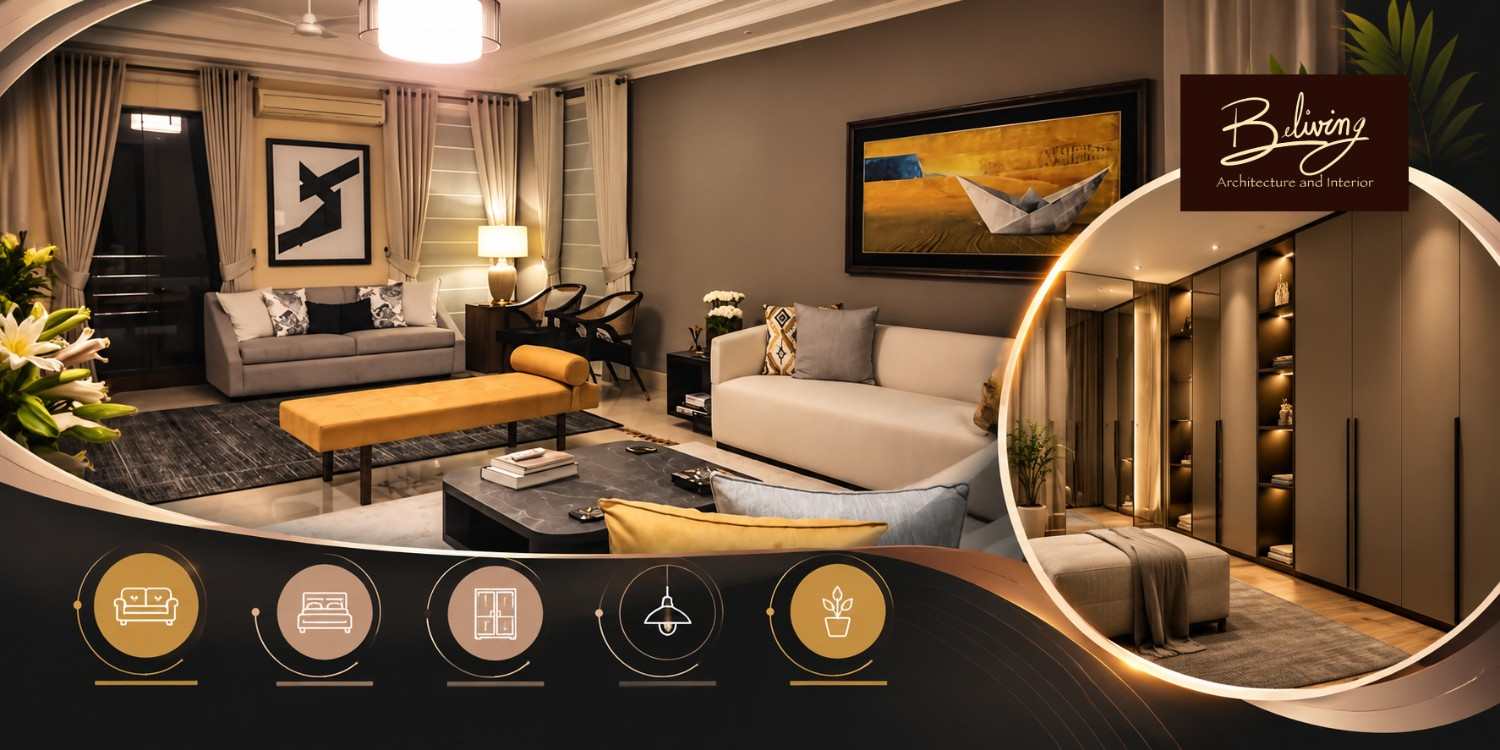
A comfortable and well-organised home needs careful consideration of one’s lifestyle, available space, and requirements. No matter whether you live in an apartment in Dwarka, a family house in Rohini, or a large house in Greater Kailash, Home Interior Designers in Delhi will assist you in maximising the space, making better storage arrangements, and choosing proper materials and furniture. Interior planning will make your routine more comfortable and will give your home the character it deserves.
There are different design requirements for homes in Delhi. Some apartments need better furniture arrangement, whereas some old houses require improved lighting, new finishing materials or storage arrangements. Beliving Interior specialises in combining personal preferences with proper planning, materials and implementation of the interior.
Choosing the proper design strategy is not just about following trends. It should involve realistic budgeting, careful planning of the space, and decisions that will reflect your lifestyle in the long run. This guide will discuss practical ideas for design, indicative prices, implementation and selection of the proper interior designer.
1. Plan Your Home Around Your Lifestyle
The best interiors begin with understanding how your family uses each room. A home designed around everyday routines can feel more comfortable and functional than one planned primarily around appearances.
For example, a family in a two-bedroom apartment in Dwarka may need additional wardrobe space, a compact study corner, and a dining arrangement that preserves walking space. A larger South Delhi residence may require distinct areas for entertaining guests, relaxing with family, and working from home.
Start by identifying your biggest challenges. Consider insufficient storage, poor lighting, crowded passages, limited kitchen counter space, or furniture that no longer meets your needs.
Beliving Interior can help translate these priorities into a design concept that balances aesthetics with practical requirements. Prioritise improvements that make everyday living easier instead of spending equally on every room.
2. Maximise Space in Delhi Apartments
Space planning is particularly important in Delhi apartments, where compact bedrooms, structural columns, narrow passages, and fixed utility areas can limit furniture placement. The goal is to improve usability without making rooms feel crowded.
In a compact Rohini apartment, a wall-mounted television unit, storage bed, and wardrobe with organised compartments can free up valuable floor space. In an older South Delhi property, repositioning furniture and improving natural light may make a room feel more open without extensive structural changes.
Consider these practical improvements before purchasing new furniture:
- Use vertical storage: Extend wardrobes towards the ceiling and reserve upper shelves for seasonal belongings.
- Choose multifunctional furniture: Storage beds, nesting tables, foldable desks, and extendable dining tables can serve multiple purposes.
- Keep circulation clear: Maintain comfortable access around doors, beds, dining chairs, and kitchen cabinets.
- Improve lighting: Combine general lighting with task lights and selected accent fixtures.
- Reduce visual clutter: Use concealed storage to organise everyday belongings and keep frequently used surfaces clear.
Measure each room carefully before finalising furniture. Door swings, window access, electrical sockets, and cabinet openings should all be considered during planning.
3. Select Materials That Balance Style and Durability
Materials affect your home’s appearance, maintenance requirements, and long-term performance. A finish that looks impressive in a showroom may not suit a household that cooks frequently or needs easy-to-clean surfaces.
For wardrobes and kitchen cabinets, compare laminate, acrylic, and other available finishes according to durability, appearance, maintenance, and budget. Check the quality of the underlying boards, edge finishing, hinges, drawer channels, and installation.
Flooring also deserves careful consideration. Vitrified tiles may suit high-traffic areas, while wood-look finishes can add warmth to bedrooms and living rooms. The right choice depends on moisture exposure, maintenance preferences, and the overall design.
Ask for material samples and review them under your home’s lighting conditions. Confirm the exact specifications in writing before approving the final quotation.
Beliving Interior can be evaluated on how clearly it explains material options, practical trade-offs, and budget implications. Transparent specifications help prevent misunderstandings during procurement and installation.
4. Design a Functional Modular Kitchen
A well-planned kitchen should make cooking, cleaning, and storage convenient. Before choosing cabinet colours, assess the counter space, appliance dimensions, ventilation, plumbing points, and movement between work areas.
In Delhi apartments, compact kitchens often benefit from organised drawers, corner-storage solutions, overhead cabinets, and dedicated spaces for frequently used appliances. However, additional cabinetry should not reduce comfortable access or leave insufficient working surfaces.
Choose finishes that withstand regular cleaning and exposure to cooking residue. Keep heavy cookware in accessible drawers, position frequently used ingredients within easy reach, and provide suitable task lighting above preparation areas.
Confirm electrical and plumbing requirements before manufacturing begins. Changes made after cabinets have been installed can increase costs and delay completion.
5. Create Comfortable and Organised Bedrooms
Bedrooms should support rest, privacy, and convenient storage. Start with the bed position, wardrobe dimensions, window access, lighting, and walking space before selecting decorative elements.
For smaller rooms, sliding wardrobes may work well where hinged doors would restrict movement. Internal drawers, adjustable shelves, and dedicated accessory compartments can improve storage without increasing the wardrobe’s external dimensions.
Lighting should suit the room’s purpose. General lighting provides visibility, bedside fixtures support reading, and softer accent lighting can create a relaxing atmosphere.
For children’s bedrooms or guest rooms, consider furniture that adapts to changing needs. Flexible storage and appropriately sized desks can make these spaces useful for longer without frequent redesigns.
6. Understand Home Interior Design Costs in Delhi
Interior design budgets depend on property size, custom furniture, material specifications, civil work, electrical changes, and furnishing requirements. A partial makeover will require a different investment from a complete home interior project.
The following are broad illustrative planning estimates for Delhi, not verified quotations or guaranteed market rates.
| Home or project scope | Indicative budget |
| Basic interiors for a compact 1 BHK | ₹2–5 lakh |
| Mid-range interiors for a 2 BHK | ₹5–10 lakh |
| Mid-range interiors for a 3 BHK | ₹8–16 lakh |
| Premium interiors for a 3 BHK | ₹15–30 lakh or more |
Actual costs vary according to package inclusions. Appliances, loose furniture, premium finishes, extensive electrical work, and structural alterations may be charged separately.
What affects your final budget?
Custom furniture: Wardrobes, kitchen cabinets, beds, storage units, and television consoles can account for a substantial portion of expenditure.
Materials and hardware: Board quality, surface finishes, hinges, drawer channels, and accessories affect initial costs and long-term performance.
Civil and electrical work: Wiring changes, plumbing, flooring, ceiling work, and wall repairs can increase the project scope.
Furniture and furnishings: Sofas, mattresses, curtains, rugs, dining sets, and decorative accessories may fall outside the core interior package.
Installation and coordination: Labour, transportation, installation, and site supervision responsibilities should be clearly defined in the quotation.
Request an itemised estimate with quantities, material specifications, inclusions, exclusions, applicable taxes, and payment milestones. A contingency reserve of around 10–15% can help manage unexpected requirements, especially during renovations.
7. Follow a Structured Design and Execution Process
A clear execution plan helps prevent costly changes and confusion between designers, contractors, and homeowners. Each stage should have defined deliverables and approval points.
Stage 1: Site assessment and consultation
The designer measures the property, evaluates existing conditions, and discusses your lifestyle, storage requirements, design preferences, and budget. Electrical points, plumbing locations, ventilation, and access restrictions should also be documented.
Stage 2: Layout planning and concept development
Furniture layouts, circulation paths, room functions, and storage arrangements are established before finalising the visual design. Material palettes, colour schemes, and 3D views can then help you understand the proposed interiors.
Stage 3: Drawings and final approvals
Review working drawings, cabinet dimensions, lighting arrangements, and electrical layouts. Approve materials, hardware, quantities, and the quotation before production or site work begins.
Stage 4: Procurement and installation
Materials are ordered, contractors are coordinated, and furniture manufacturing proceeds according to approved specifications. Regular site inspections help identify installation issues before they affect other work.
Stage 5: Quality checks and handover
Test cabinet doors, drawers, switches, lighting, plumbing fixtures, and included appliances. Document unfinished items and collect relevant warranties, care instructions, and handover records.
A realistic schedule should account for design approvals, material availability, manufacturing, and site conditions. Beliving Interior should be assessed on the clarity of its proposed process, deliverables, and responsibilities rather than promises about speed alone.
8. Choose an Interior Design Partner Carefully
A suitable design partner should listen to your requirements, explain technical decisions, and provide a realistic plan for delivering the agreed work. A polished portfolio is useful, but communication, material transparency, and execution management matter just as much.
When comparing Top Interior Designers in South Delhi look for experience with properties similar to yours. Renovating an older independent floor may require different decisions from furnishing a newly constructed apartment.
Ask prospective designers about space planning, material selection, site supervision, budget management, and design revisions. Compare written proposals instead of relying on headline prices or visual presentations alone.
Beliving Interior can be considered when its design approach and project scope match your needs. Before committing, confirm who will manage procurement, supervise installation, coordinate contractors, and resolve defects. Document approved changes so costs and timelines remain transparent.
A Client–Designer Conversation About Home Interiors
Client: We would like to modernize our Delhi home while retaining our storage space and without going over budget.
Designer: We can start by understanding your layout, lifestyle, and priorities for changes.
Client: Is it possible to have a design that represents us but is also practical?
Designer: Yes. Beliving Interior can help create personalized and practical spaces using the Home Interior Designers in Delhi.
9. Create a Productive Home Office
Many Delhi homeowners need a dedicated workspace for remote work, studying, or managing a business. Even a compact room can support productivity when furniture, lighting, storage, and electrical access are planned carefully.
Choose a desk that accommodates your computer and everyday work materials. Provide a comfortable chair, convenient power outlets, task lighting, and shelves or drawers that keep paperwork organised.
If the space doubles as a guest bedroom, consider a foldable desk or flexible furniture arrangement. For frequent video meetings, account for background clutter, natural light, and noise from nearby roads or shared living areas.
Businesses in Gurugram have different requirements, which is where Office Interior Designers in Gurgaon focus on workstation planning, meeting areas, employee circulation, acoustics, and brand identity. Residential workspaces can benefit from similar principles while remaining comfortable for home life.
10. Improve Your Home Without Overspending
A beautiful home does not require premium materials in every room. A smarter approach is to invest in frequently used elements and simplify areas where expensive finishes offer limited practical benefits.
Prioritise functional storage, durable kitchen hardware, comfortable seating, and well-planned lighting. Decorative accessories, artwork, and selected furnishings can be added gradually once essential work is complete.
However, avoid postponing concealed electrical, plumbing, or other essential work that would be expensive to revisit later. Complete these tasks before installing finished furniture and decorative surfaces.
Maintain records of approved materials, invoices, warranties, and design changes. These documents simplify future repairs and help preserve consistency if you renovate another room.
Summary
The transformation of your house begins from knowing how you live, spotting issues, and selecting solutions where looks come second to usability. Proper planning, use of lasting materials, proper budgeting, and systematic execution could go a long way towards increasing your comfort.
If you are living in a small Dwarka flat or an airy South Delhi house, it is always best to focus on those modifications which benefit your family without blindly imitating every new fad. Beliving Interior could be a good design ally if what it offers matches your needs.
Working with experienced Home Interior Designers in Delhi can also help you coordinate design decisions, compare suitable materials, and establish a clear project scope before work begins. The key is to make informed choices that support your lifestyle today while remaining practical for years to come.
Some Important Questions
1. How much do home interiors cost in Delhi?
Costs vary according to property size, materials, custom furniture, and project scope. As broad planning estimates, basic 1 BHK interiors may cost ₹2–5 lakh, while mid-range 2 BHK interiors may cost ₹5–10 lakh. Obtain an itemised quotation for an accurate estimate.
2. How long does a home interior project take?
A straightforward apartment project may take around 6–12 weeks after design approvals. Larger renovations may take several months, depending on procurement, custom manufacturing, civil work, and site conditions.
3. How can I make a small apartment look more spacious?
Choose appropriately sized furniture, use vertical storage, maintain clear walking paths, and combine general lighting with task lighting. Multifunctional furniture and organised wardrobes can improve usability without major structural changes.
4. What should I check before hiring an interior designer?
Review relevant completed projects, compare detailed quotations, confirm material specifications, and discuss supervision, timelines, warranties, and payment milestones. Ensure exclusions and additional-work charges are documented.
5. What should I discuss with Beliving Interior before starting?
Discuss your property layout, lifestyle requirements, preferred design style, budget, expected timeline, and required services. Confirm the proposed deliverables, material specifications, execution responsibilities, and handover terms before signing an agreement.
About us –
Official Mobile No. – +91 9871678798
Comments
Add a comment
Home Interior Designers in Delhi: Upgrade Your Lifestyle
A comfortable and well-organised home needs careful consideration of one’s lifestyle, available space, and requirements. No matter whether you live in an apartment in Dwarka, a family house in Rohini, or a large house in Greater Kailash, Home Interior Designers in Delhi will assist you in maximising the space, making better storage arrangements, and choosing proper materials and furniture. Interior planning will make your routine more comfortable and will give your home the character it deserves.
There are different design requirements for homes in Delhi. Some apartments need better furniture arrangement, whereas some old houses require improved lighting, new finishing materials or storage arrangements. Beliving Interior specialises in combining personal preferences with proper planning, materials and implementation of the interior.
Choosing the proper design strategy is not just about following trends. It should involve realistic budgeting, careful planning of the space, and decisions that will reflect your lifestyle in the long run. This guide will discuss practical ideas for design, indicative prices, implementation and selection of the proper interior designer.
1. Plan Your Home Around Your Lifestyle
The best interiors begin with understanding how your family uses each room. A home designed around everyday routines can feel more comfortable and functional than one planned primarily around appearances.
For example, a family in a two-bedroom apartment in Dwarka may need additional wardrobe space, a compact study corner, and a dining arrangement that preserves walking space. A larger South Delhi residence may require distinct areas for entertaining guests, relaxing with family, and working from home.
Start by identifying your biggest challenges. Consider insufficient storage, poor lighting, crowded passages, limited kitchen counter space, or furniture that no longer meets your needs.
Beliving Interior can help translate these priorities into a design concept that balances aesthetics with practical requirements. Prioritise improvements that make everyday living easier instead of spending equally on every room.
2. Maximise Space in Delhi Apartments
Space planning is particularly important in Delhi apartments, where compact bedrooms, structural columns, narrow passages, and fixed utility areas can limit furniture placement. The goal is to improve usability without making rooms feel crowded.
In a compact Rohini apartment, a wall-mounted television unit, storage bed, and wardrobe with organised compartments can free up valuable floor space. In an older South Delhi property, repositioning furniture and improving natural light may make a room feel more open without extensive structural changes.
Consider these practical improvements before purchasing new furniture:
- Use vertical storage: Extend wardrobes towards the ceiling and reserve upper shelves for seasonal belongings.
- Choose multifunctional furniture: Storage beds, nesting tables, foldable desks, and extendable dining tables can serve multiple purposes.
- Keep circulation clear: Maintain comfortable access around doors, beds, dining chairs, and kitchen cabinets.
- Improve lighting: Combine general lighting with task lights and selected accent fixtures.
- Reduce visual clutter: Use concealed storage to organise everyday belongings and keep frequently used surfaces clear.
Measure each room carefully before finalising furniture. Door swings, window access, electrical sockets, and cabinet openings should all be considered during planning.
3. Select Materials That Balance Style and Durability
Materials affect your home’s appearance, maintenance requirements, and long-term performance. A finish that looks impressive in a showroom may not suit a household that cooks frequently or needs easy-to-clean surfaces.
For wardrobes and kitchen cabinets, compare laminate, acrylic, and other available finishes according to durability, appearance, maintenance, and budget. Check the quality of the underlying boards, edge finishing, hinges, drawer channels, and installation.
Flooring also deserves careful consideration. Vitrified tiles may suit high-traffic areas, while wood-look finishes can add warmth to bedrooms and living rooms. The right choice depends on moisture exposure, maintenance preferences, and the overall design.
Ask for material samples and review them under your home’s lighting conditions. Confirm the exact specifications in writing before approving the final quotation.
Beliving Interior can be evaluated on how clearly it explains material options, practical trade-offs, and budget implications. Transparent specifications help prevent misunderstandings during procurement and installation.
4. Design a Functional Modular Kitchen
A well-planned kitchen should make cooking, cleaning, and storage convenient. Before choosing cabinet colours, assess the counter space, appliance dimensions, ventilation, plumbing points, and movement between work areas.
In Delhi apartments, compact kitchens often benefit from organised drawers, corner-storage solutions, overhead cabinets, and dedicated spaces for frequently used appliances. However, additional cabinetry should not reduce comfortable access or leave insufficient working surfaces.
Choose finishes that withstand regular cleaning and exposure to cooking residue. Keep heavy cookware in accessible drawers, position frequently used ingredients within easy reach, and provide suitable task lighting above preparation areas.
Confirm electrical and plumbing requirements before manufacturing begins. Changes made after cabinets have been installed can increase costs and delay completion.
5. Create Comfortable and Organised Bedrooms
Bedrooms should support rest, privacy, and convenient storage. Start with the bed position, wardrobe dimensions, window access, lighting, and walking space before selecting decorative elements.
For smaller rooms, sliding wardrobes may work well where hinged doors would restrict movement. Internal drawers, adjustable shelves, and dedicated accessory compartments can improve storage without increasing the wardrobe’s external dimensions.
Lighting should suit the room’s purpose. General lighting provides visibility, bedside fixtures support reading, and softer accent lighting can create a relaxing atmosphere.
For children’s bedrooms or guest rooms, consider furniture that adapts to changing needs. Flexible storage and appropriately sized desks can make these spaces useful for longer without frequent redesigns.
6. Understand Home Interior Design Costs in Delhi
Interior design budgets depend on property size, custom furniture, material specifications, civil work, electrical changes, and furnishing requirements. A partial makeover will require a different investment from a complete home interior project.
The following are broad illustrative planning estimates for Delhi, not verified quotations or guaranteed market rates.
| Home or project scope | Indicative budget |
| Basic interiors for a compact 1 BHK | ₹2–5 lakh |
| Mid-range interiors for a 2 BHK | ₹5–10 lakh |
| Mid-range interiors for a 3 BHK | ₹8–16 lakh |
| Premium interiors for a 3 BHK | ₹15–30 lakh or more |
Actual costs vary according to package inclusions. Appliances, loose furniture, premium finishes, extensive electrical work, and structural alterations may be charged separately.
What affects your final budget?
Custom furniture: Wardrobes, kitchen cabinets, beds, storage units, and television consoles can account for a substantial portion of expenditure.
Materials and hardware: Board quality, surface finishes, hinges, drawer channels, and accessories affect initial costs and long-term performance.
Civil and electrical work: Wiring changes, plumbing, flooring, ceiling work, and wall repairs can increase the project scope.
Furniture and furnishings: Sofas, mattresses, curtains, rugs, dining sets, and decorative accessories may fall outside the core interior package.
Installation and coordination: Labour, transportation, installation, and site supervision responsibilities should be clearly defined in the quotation.
Request an itemised estimate with quantities, material specifications, inclusions, exclusions, applicable taxes, and payment milestones. A contingency reserve of around 10–15% can help manage unexpected requirements, especially during renovations.
7. Follow a Structured Design and Execution Process
A clear execution plan helps prevent costly changes and confusion between designers, contractors, and homeowners. Each stage should have defined deliverables and approval points.
Stage 1: Site assessment and consultation
The designer measures the property, evaluates existing conditions, and discusses your lifestyle, storage requirements, design preferences, and budget. Electrical points, plumbing locations, ventilation, and access restrictions should also be documented.
Stage 2: Layout planning and concept development
Furniture layouts, circulation paths, room functions, and storage arrangements are established before finalising the visual design. Material palettes, colour schemes, and 3D views can then help you understand the proposed interiors.
Stage 3: Drawings and final approvals
Review working drawings, cabinet dimensions, lighting arrangements, and electrical layouts. Approve materials, hardware, quantities, and the quotation before production or site work begins.
Stage 4: Procurement and installation
Materials are ordered, contractors are coordinated, and furniture manufacturing proceeds according to approved specifications. Regular site inspections help identify installation issues before they affect other work.
Stage 5: Quality checks and handover
Test cabinet doors, drawers, switches, lighting, plumbing fixtures, and included appliances. Document unfinished items and collect relevant warranties, care instructions, and handover records.
A realistic schedule should account for design approvals, material availability, manufacturing, and site conditions. Beliving Interior should be assessed on the clarity of its proposed process, deliverables, and responsibilities rather than promises about speed alone.
8. Choose an Interior Design Partner Carefully
A suitable design partner should listen to your requirements, explain technical decisions, and provide a realistic plan for delivering the agreed work. A polished portfolio is useful, but communication, material transparency, and execution management matter just as much.
When comparing Top Interior Designers in South Delhi look for experience with properties similar to yours. Renovating an older independent floor may require different decisions from furnishing a newly constructed apartment.
Ask prospective designers about space planning, material selection, site supervision, budget management, and design revisions. Compare written proposals instead of relying on headline prices or visual presentations alone.
Beliving Interior can be considered when its design approach and project scope match your needs. Before committing, confirm who will manage procurement, supervise installation, coordinate contractors, and resolve defects. Document approved changes so costs and timelines remain transparent.
A Client–Designer Conversation About Home Interiors
Client: We would like to modernize our Delhi home while retaining our storage space and without going over budget.
Designer: We can start by understanding your layout, lifestyle, and priorities for changes.
Client: Is it possible to have a design that represents us but is also practical?
Designer: Yes. Beliving Interior can help create personalized and practical spaces using the Home Interior Designers in Delhi.
9. Create a Productive Home Office
Many Delhi homeowners need a dedicated workspace for remote work, studying, or managing a business. Even a compact room can support productivity when furniture, lighting, storage, and electrical access are planned carefully.
Choose a desk that accommodates your computer and everyday work materials. Provide a comfortable chair, convenient power outlets, task lighting, and shelves or drawers that keep paperwork organised.
If the space doubles as a guest bedroom, consider a foldable desk or flexible furniture arrangement. For frequent video meetings, account for background clutter, natural light, and noise from nearby roads or shared living areas.
Businesses in Gurugram have different requirements, which is where Office Interior Designers in Gurgaon focus on workstation planning, meeting areas, employee circulation, acoustics, and brand identity. Residential workspaces can benefit from similar principles while remaining comfortable for home life.
10. Improve Your Home Without Overspending
A beautiful home does not require premium materials in every room. A smarter approach is to invest in frequently used elements and simplify areas where expensive finishes offer limited practical benefits.
Prioritise functional storage, durable kitchen hardware, comfortable seating, and well-planned lighting. Decorative accessories, artwork, and selected furnishings can be added gradually once essential work is complete.
However, avoid postponing concealed electrical, plumbing, or other essential work that would be expensive to revisit later. Complete these tasks before installing finished furniture and decorative surfaces.
Maintain records of approved materials, invoices, warranties, and design changes. These documents simplify future repairs and help preserve consistency if you renovate another room.
Summary
The transformation of your house begins from knowing how you live, spotting issues, and selecting solutions where looks come second to usability. Proper planning, use of lasting materials, proper budgeting, and systematic execution could go a long way towards increasing your comfort.
If you are living in a small Dwarka flat or an airy South Delhi house, it is always best to focus on those modifications which benefit your family without blindly imitating every new fad. Beliving Interior could be a good design ally if what it offers matches your needs.
Working with experienced Home Interior Designers in Delhi can also help you coordinate design decisions, compare suitable materials, and establish a clear project scope before work begins. The key is to make informed choices that support your lifestyle today while remaining practical for years to come.
Some Important Questions
1. How much do home interiors cost in Delhi?
Costs vary according to property size, materials, custom furniture, and project scope. As broad planning estimates, basic 1 BHK interiors may cost ₹2–5 lakh, while mid-range 2 BHK interiors may cost ₹5–10 lakh. Obtain an itemised quotation for an accurate estimate.
2. How long does a home interior project take?
A straightforward apartment project may take around 6–12 weeks after design approvals. Larger renovations may take several months, depending on procurement, custom manufacturing, civil work, and site conditions.
3. How can I make a small apartment look more spacious?
Choose appropriately sized furniture, use vertical storage, maintain clear walking paths, and combine general lighting with task lighting. Multifunctional furniture and organised wardrobes can improve usability without major structural changes.
4. What should I check before hiring an interior designer?
Review relevant completed projects, compare detailed quotations, confirm material specifications, and discuss supervision, timelines, warranties, and payment milestones. Ensure exclusions and additional-work charges are documented.
5. What should I discuss with Beliving Interior before starting?
Discuss your property layout, lifestyle requirements, preferred design style, budget, expected timeline, and required services. Confirm the proposed deliverables, material specifications, execution responsibilities, and handover terms before signing an agreement.
About us –
Official Mobile No. – +91 9871678798