
How Is Skin Tag Removal Treatment Performed?
Skin Tag Removal Treatment is a procedure used to remove small, benign skin growths that may cause irritation, discomfort, or cosmetic concerns. The treatment method depends on the size, location, and characteristics of the skin tag, as well as the individual’s medical history. People considering إزالة الزوائد الجلدية في دبي can benefit from understanding how the procedure is performed, what happens during the appointment, and how to care for the skin afterward. A qualified healthcare professional first examines the growth to confirm the diagnosis and then selects an appropriate removal technique to minimize complications and support healing.
What Happens Before Skin Tag Removal?
The procedure usually begins with a consultation and examination. Although most skin tags are harmless, some other skin growths can look similar, so confirming the diagnosis is important.
During the assessment, the healthcare professional may:
- Examine the size, shape, colour, and location of the growth.
- Ask whether it causes irritation, bleeding, or discomfort.
- Review medical history, allergies, and current medications.
- Consider any history of abnormal scarring or pigmentation changes.
- Explain the available removal methods and their possible risks.
If the growth looks unusual, changes rapidly, or bleeds without an obvious cause, further assessment may be needed before removal.
How Is Skin Tag Removal Performed?
Several techniques can be used to remove skin tags. The choice depends on the individual growth and the clinician’s assessment.
Surgical Snipping or Excision:
Surgical removal involves cutting the skin tag away with sterile medical instruments.
The healthcare professional cleans the treatment area and may use local anesthesia when appropriate. The growth is then carefully removed, and pressure is applied if needed to control minor bleeding.
This technique is often suitable for selected small skin tags, particularly those attached by a narrow stalk. Larger growths may require a different approach or additional wound care.
Cryotherapy:
Cryotherapy removes selected skin tags by applying a controlled freezing agent, often liquid nitrogen, to the growth.
The freezing process damages the targeted tissue. The treated area may become red, develop a blister or crust, and eventually heal as the damaged tissue separates.
The timing and suitability of cryotherapy depend on the growth’s characteristics and the clinician’s judgment.
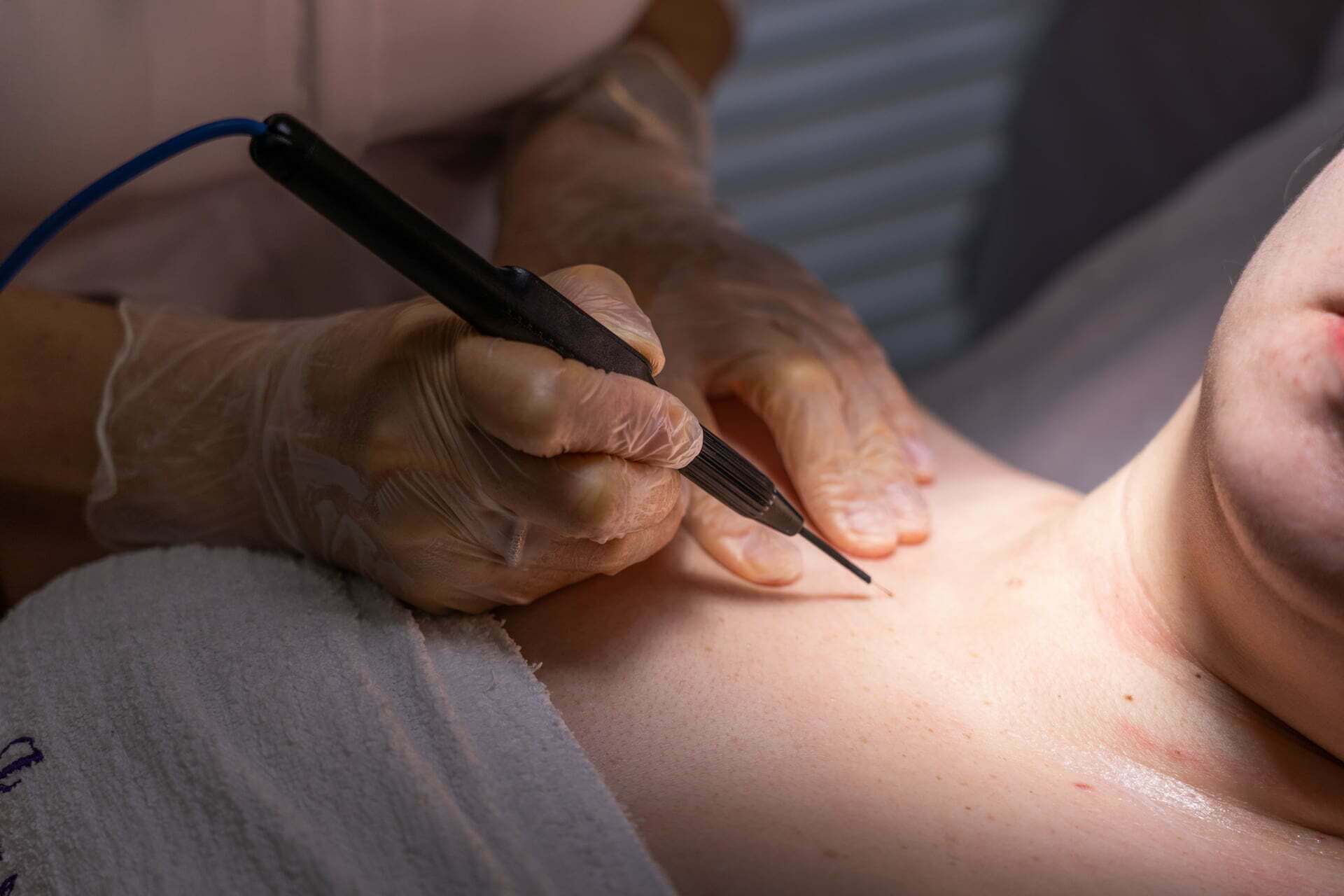
Electrocautery:
Electrocautery uses controlled electrical heat to remove or destroy the skin tag.
The professional prepares the skin and may apply local anesthesia before treating the growth. The heat targets the tissue, and a small crust may develop as the area heals.
Careful technique is important to reduce the risk of burns, scarring, or changes in skin pigmentation.
Laser Removal:
Laser removal uses focused light energy to target the skin tag. It may be considered in selected cases depending on the growth’s characteristics and the provider’s expertise.
The clinician selects an appropriate device and settings based on the treatment area and skin characteristics. The treated skin may be temporarily red or sensitive afterward.
Laser treatment is not necessary for every skin tag, and it is not automatically superior to other removal methods.
Does Skin Tag Removal Require Anesthesia?
Not every skin tag removal procedure requires anesthesia. Small growths may be removed with minimal discomfort, while other techniques or locations may require local anesthesia.
The decision depends on the removal method, the size of the skin tag, and the individual’s sensitivity.
Patients should tell the healthcare professional if they have allergies to local anesthetics or have experienced reactions during previous procedures.
How Long Does the Procedure Take?
The duration depends on the number, size, and location of the skin tags and the technique used.
Removing a single small skin tag may take only a few minutes, while treating several growths may require more time. The consultation, preparation, and aftercare instructions also contribute to the overall appointment.
The clinician can provide a more accurate estimate after examining the treatment area.
What Happens Immediately After Skin Tag Removal?
After the procedure, the treated area may appear slightly red, tender, or swollen. Depending on the technique, a small scab, crust, or blister may form.
The healthcare professional may provide instructions about cleaning the site, protecting it from friction, and applying an appropriate wound-care product.
Patients should avoid picking at the treated area because this can delay healing and increase the risk of infection or scarring.
How Long Does Recovery Take?
Healing varies depending on the removal method, the size of the treatment site, and individual skin characteristics. Small treatment areas may heal within several days to a few weeks.
During recovery, it is important to:
- Keep the area clean according to the clinician’s instructions.
- Avoid scratching or removing scabs.
- Protect the site from repeated rubbing or irritation.
- Avoid applying harsh chemicals or exfoliating products to an open wound.
- Follow advice about sun protection once the skin has closed.
Temporary redness or pigmentation changes may remain after the wound has healed and can take longer to fade.
Is Skin Tag Removal Safe?
Skin tag removal is generally straightforward when performed by a qualified healthcare professional using an appropriate technique. However, possible complications include bleeding, infection, irritation, scarring, and changes in skin pigmentation.
The risk depends on the removal method, treatment location, and individual healing characteristics.
Professional assessment is particularly important for skin tags near the eyes or for growths that have not been diagnosed. Attempting to cut, burn, or chemically remove a skin tag at home can lead to avoidable injury.
Seek medical advice if the treated area develops increasing pain, spreading redness, pus, persistent bleeding, or other signs of a complication.
Frequently Asked Questions:
Can Skin Tag Removal Be Completed in One Appointment?
Many small skin tags can be removed during a single visit. However, the number that can be treated depends on their size, location, and the clinician’s assessment.
Is Skin Tag Removal Painful?
Discomfort varies by method and location. Local anesthesia may be used when appropriate, and mild tenderness can occur during recovery.
Will Skin Tags Grow Back After Removal?
A completely removed skin tag usually does not return in exactly the same spot. However, new skin tags can develop in nearby areas or elsewhere on the body.
Does Skin Tag Removal Leave a Scar?
A small scar or pigmentation change is possible. The likelihood depends on the technique, the depth of treatment, the location, and individual healing characteristics.
Can I Remove a Skin Tag at Home?
Professional removal is safer than cutting, tying off, burning, or applying unapproved products at home. These methods can cause bleeding, infection, burns, and scarring.
Conclusion:
Skin Tag Removal Treatment is performed using techniques such as surgical snipping, cryotherapy, electrocautery, or selected laser procedures. The process generally includes an initial examination, selection of a suitable method, removal of the growth, and instructions for aftercare. Recovery usually takes several days to a few weeks, depending on the technique and individual healing. A qualified healthcare professional can confirm the diagnosis, explain the potential risks, and recommend the most appropriate approach for safe and effective removal.