
Travel to India from USA: Complete Guide for First-Time Travelers
Travel to India from USA: Complete Guide for First-Time Travelers
Planning to travel to India from USA for the first time can feel exciting and overwhelming at the same time. India is a vast country with different cultures, climates, cuisines, languages, and travel experiences across every region.
For American travelers, the key is to plan the basics—visa, flights, health preparation, transportation, accommodation, and itinerary—before arriving. With the right preparation, your first Indian holiday can be comfortable, safe, and unforgettable.
India is also an increasingly popular destination for American travelers. In 2024, the United States was India’s largest source country for foreign tourist arrivals, with approximately 1.80 million arrivals, representing 18.13% of India’s foreign tourist arrivals.
What Do Americans Need to Travel to India?
If you are planning to travel to India from USA, you generally need a valid U.S. passport, an appropriate Indian visa or e-Visa, confirmed travel arrangements, and your arrival information. U.S. citizens are eligible for India’s e-Visa for qualifying tourism purposes.
First-time travelers should:
- Apply for the appropriate Indian visa/e-Visa through the official portal.
- Check passport validity and visa conditions before booking.
- Complete India’s e-Arrival Card within 72 hours before arrival. It is an arrival-information form, not a visa.
- Consult a healthcare professional about recommended travel vaccinations.
- Choose destinations according to the season.
- Keep some Indian rupees available for small purchases.
- Use reputable transportation and accommodation providers.
- Leave enough time between destinations instead of trying to see all of India in one trip.
Travel to India from USA: Visa and Entry Requirements
Visa preparation should be one of the first steps when planning your journey.
India’s official visa portal states that foreign nationals generally need a valid passport and an Indian visa or eligible e-Visa to enter India. The United States is included among countries eligible for India’s e-Visa program for qualifying purposes.
Indian e-Visa
For many leisure travelers, an e-Tourist Visa can be the most convenient option. Always check the current eligibility, permitted activities, validity, entry points, and application requirements before applying.
Important: Use the official Government of India visa website rather than relying on unofficial websites that may charge additional service fees.
After obtaining your visa, save:
- Passport copy
- Visa approval/ETA
- Flight confirmation
- Hotel confirmations
- Travel insurance documents
- Emergency contact information
e-Arrival Card
India has introduced a digital e-Arrival Card. Foreign travelers can submit arrival information online within 72 hours before arriving in India. The official portal clearly states that the card is for arrival information and is not a visa.
Best Time to Travel to India from USA
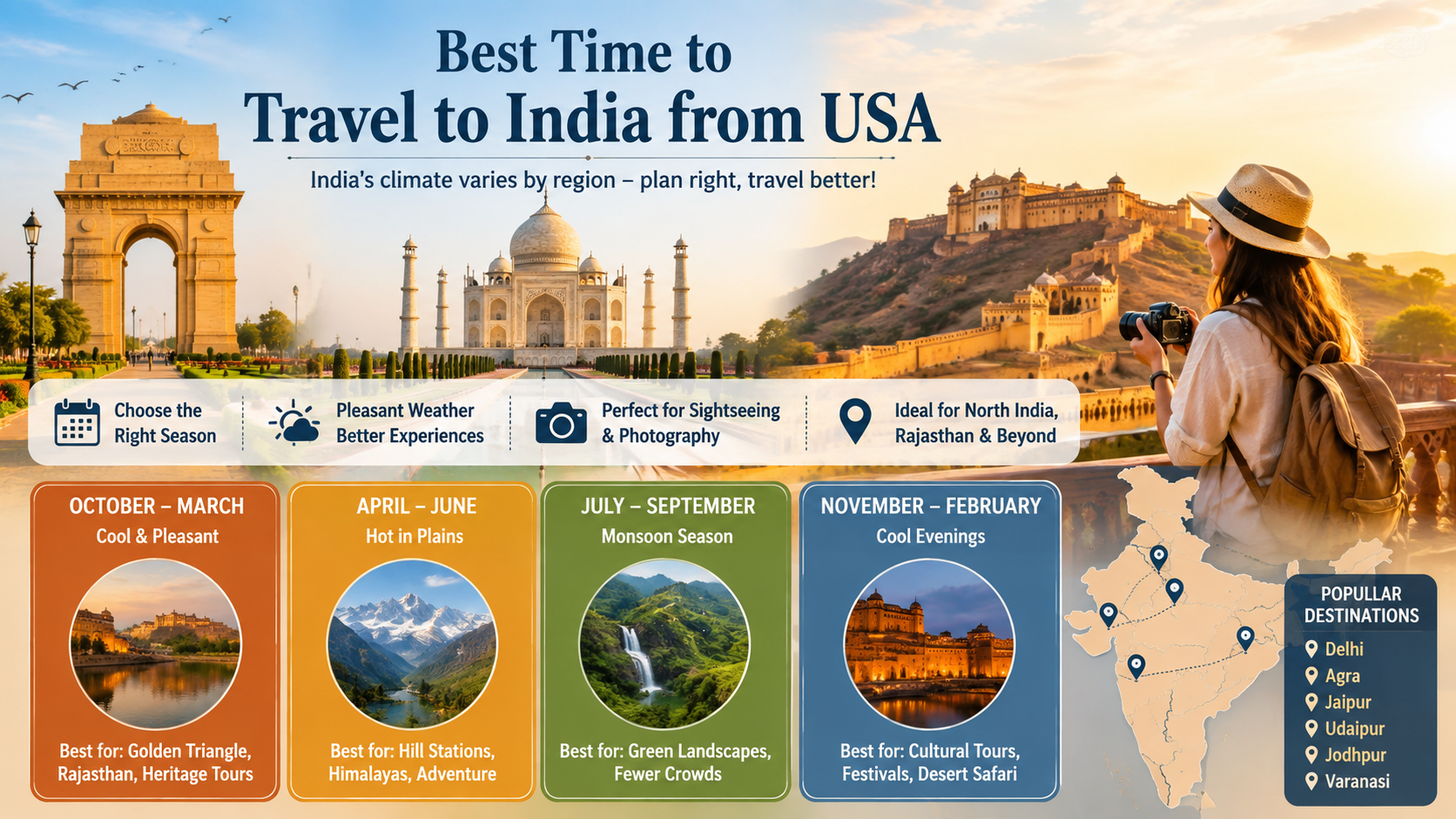
India’s climate varies considerably by region, so there is no single perfect month for the entire country.
For a first trip covering Delhi, Agra, Jaipur and Rajasthan, October through March is generally comfortable for sightseeing, although temperatures can vary by location.
| Season | What to Expect | Best For |
|---|---|---|
| October–March | Cooler and generally pleasant | Golden Triangle, Rajasthan, North India |
| April–June | Hot in many regions | Himalayan destinations, selected hill stations |
| July–September | Monsoon in many areas | Green landscapes, fewer crowds |
| November–February | Cooler evenings | Heritage tours and cultural sightseeing |
If your itinerary includes multiple regions, select the travel dates according to the destinations rather than simply choosing the cheapest flight.
Where Should First-Time American Travelers Go?
India is too large to experience completely in one vacation. Instead, choose a region based on your interests.
Golden Triangle: Delhi, Agra and Jaipur
The Golden Triangle is one of the easiest introductions to India.
You can experience:
- Delhi’s historic monuments and markets
- The Taj Mahal in Agra
- Jaipur’s forts and palaces
- Indian cuisine and shopping
- Mughal and Rajput history
A 5–7 day itinerary is a practical starting point. India Travel Expert currently offers Golden Triangle itineraries covering Delhi, Agra and Jaipur, including 4-, 5- and 7-day options.
Rajasthan
If you have more time, Rajasthan adds a deeper cultural experience.
Consider:
Jaipur → Jodhpur → Udaipur → Jaisalmer
You can experience forts, palaces, desert landscapes, traditional markets, local cuisine and heritage hotels.
Varanasi
Travelers interested in spirituality and Indian traditions may add Varanasi to a North India itinerary. The city offers experiences around the Ganges, historic ghats, temples and evening Ganga Aarti.
India Tour Packages from USA: Are They Worth It?
For first-time visitors, professionally organized India Tour Packages from USA can simplify transportation, hotels, sightseeing and itinerary planning.
India’s size is one reason organized travel can be valuable. A trip involving Delhi, Agra, Jaipur and Rajasthan may require several hotel changes and long road or rail journeys.
A good package should clearly explain:
- Hotels and room categories
- Transportation
- Airport transfers
- Sightseeing
- Guide services
- Meals included
- Monument entrance fees
- Travel insurance
- Cancellation terms
- Additional or optional expenses
Avoid selecting a package based only on the lowest advertised price. Compare the actual inclusions and quality of transportation and accommodation.
For travelers looking for customized itineraries, India Travel Expert offers routes including North India, Rajasthan, Golden Triangle and longer multi-city journeys.
How Much Does a Trip to India Cost?
Your budget depends heavily on your travel style.
As a broad planning framework:
| Travel Style | Typical Daily Planning Range* |
|---|---|
| Budget | $20–$40 |
| Mid-range | $50–$120 |
| Luxury | $200+ |
*These are planning ranges rather than fixed prices. International airfare, premium hotels, private vehicles, guides and activities can substantially increase the total.
One useful strategy is to decide your total trip budget first, then divide it among flights, hotels, transportation, food, sightseeing and shopping.
For longer trips, private transportation can be particularly convenient because it reduces the need to coordinate multiple trains, taxis and transfers.
Health and Safety Tips for Americans Visiting India
Before travel, schedule a medical consultation, ideally at least a month before departure. The CDC recommends that travelers review routine vaccinations and destination-specific recommendations. Hepatitis A is recommended for unvaccinated travelers going to India, while other vaccinations may depend on the itinerary and individual circumstances.
Practical health tips
- Drink bottled or appropriately treated water.
- Be cautious with raw food and untreated water.
- Wash your hands regularly.
- Carry basic medicines and prescriptions.
- Use sunscreen and insect repellent.
- Stay hydrated, particularly during hot weather.
- Avoid touching unfamiliar animals.
- Consider travel insurance covering medical emergencies.
The CDC specifically advises travelers to avoid unfamiliar dogs and cats because rabies remains a concern in India.
Everyday safety
India is generally welcoming to international visitors, but normal travel precautions remain important.
Keep digital and physical copies of important documents, use reputable transportation, avoid displaying large amounts of cash, and research local customs before visiting religious or culturally sensitive places.
What Should You Pack for India?
Your packing list should depend on your itinerary and season.
Essential items include:
- Lightweight, comfortable clothing
- Comfortable walking shoes
- Universal travel adapter
- Prescription medicines
- Sunscreen
- Insect repellent
- Reusable water bottle
- Power bank
- Copies of passport and visa
- Travel insurance details
- Small daypack
For temples and religious sites, modest clothing is often more appropriate and may be required.
How to Make Your First India Trip Easier
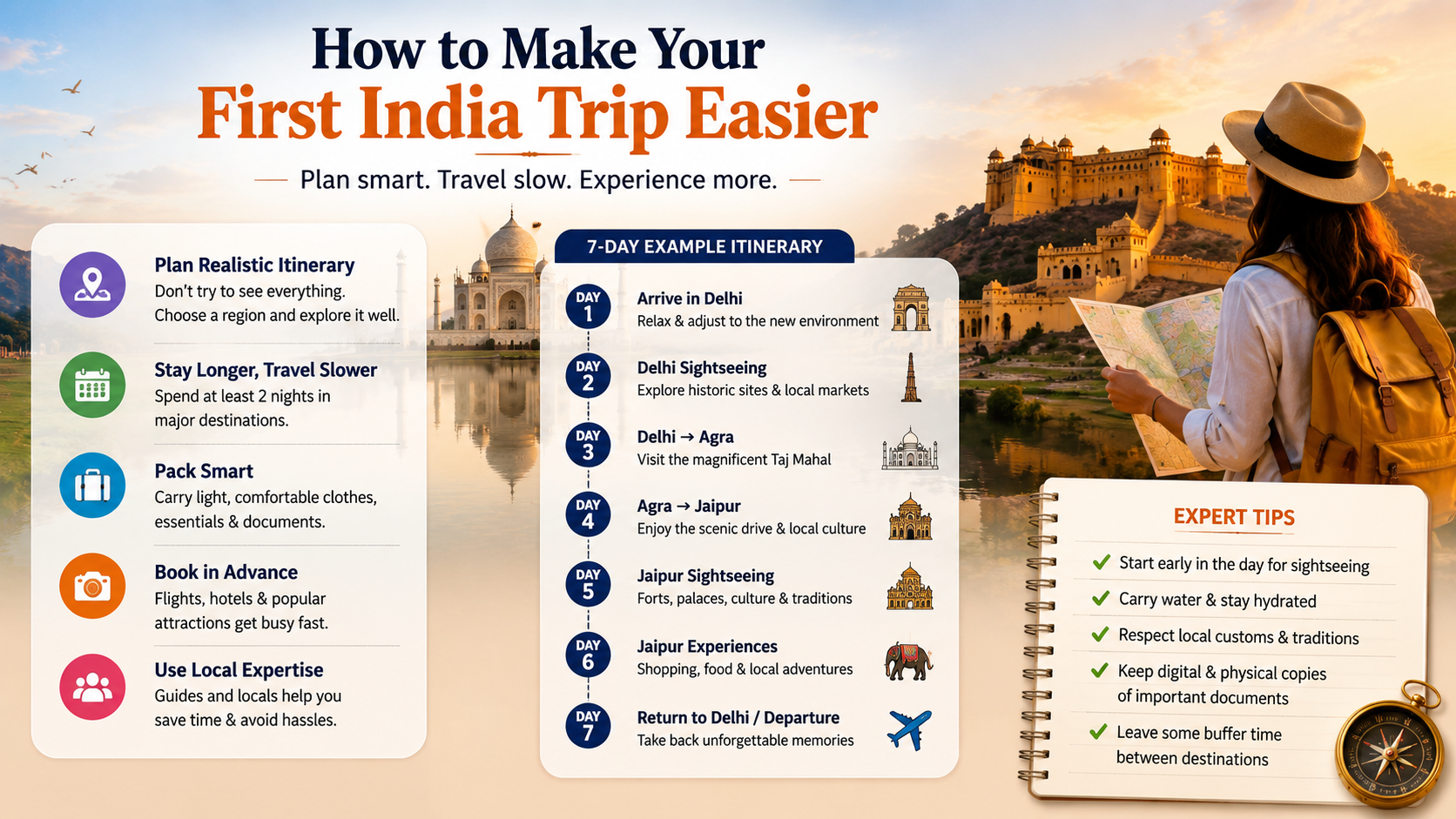
A common mistake when planning travel to India from USA is trying to cover too many destinations.
Instead, follow the slow-travel principle: spend at least two nights in important destinations whenever possible.
For example:
7-Day First Trip
- Day 1: Arrive in Delhi
- Day 2: Delhi sightseeing
- Day 3: Delhi → Agra
- Day 4: Agra → Jaipur
- Day 5: Jaipur sightseeing
- Day 6: Jaipur experiences and shopping
- Day 7: Return to Delhi/departure
This gives you time to experience the major attractions without turning the entire vacation into transportation.
Why Choose India for Your First South Asian Trip?
India offers extraordinary variety within one country. A single journey can combine UNESCO heritage sites, royal architecture, spiritual traditions, wildlife, mountains, beaches and regional cuisines.
For American travelers, the biggest advantage is the ability to build a trip around personal interests rather than following a single standard route.
The best India Tour Packages from USA should therefore be flexible enough to accommodate your travel dates, preferred destinations, hotel category and activity interests.
Conclusion
For anyone planning to travel to India from USA, preparation is the key to a smoother experience. Start with your passport and visa, choose destinations according to the season, plan realistic travel times and prioritize health and safety.
For a first trip, the Golden Triangle is an excellent starting point, while Rajasthan and Varanasi can add greater cultural depth. If managing transportation, hotels and sightseeing feels complicated, professionally planned India Tour Packages from USA can make the journey significantly easier.
The most important takeaway is simple: don’t try to see all of India in one trip. Choose a region, plan thoughtfully and leave enough time to actually experience it.
FAQs
1. Do U.S. citizens need a visa to visit India?
Yes. U.S. citizens generally need an appropriate Indian visa or eligible e-Visa before entering India. Check the official Indian Visa Online portal for current requirements and eligibility.
2. How long should Americans spend in India?
For a first visit, 7–14 days is a practical range. Seven days works well for the Golden Triangle, while two weeks allows you to combine Rajasthan, Varanasi or another region.
3. What is the best month to visit India from the USA?
For many popular North India destinations, October through March is a comfortable period for sightseeing. However, the ideal month depends on your exact itinerary.
4. Is India safe for first-time American travelers?
Millions of international visitors travel to India every year. Follow normal precautions, use reputable transportation, protect your belongings, follow local advice and check current U.S. government travel guidance before departure.
5. Are India Tour Packages from USA better than independent travel?
It depends on your preferences. Organized tours can be particularly useful for first-time visitors who want transportation, hotels, guides and sightseeing coordinated in advance. Independent travel offers more flexibility.